Examining the Effects of Targeted Promotions on Number Selection Behaviors in Digital Lottery Platforms
Tina Schulz · Aug 19, 2026
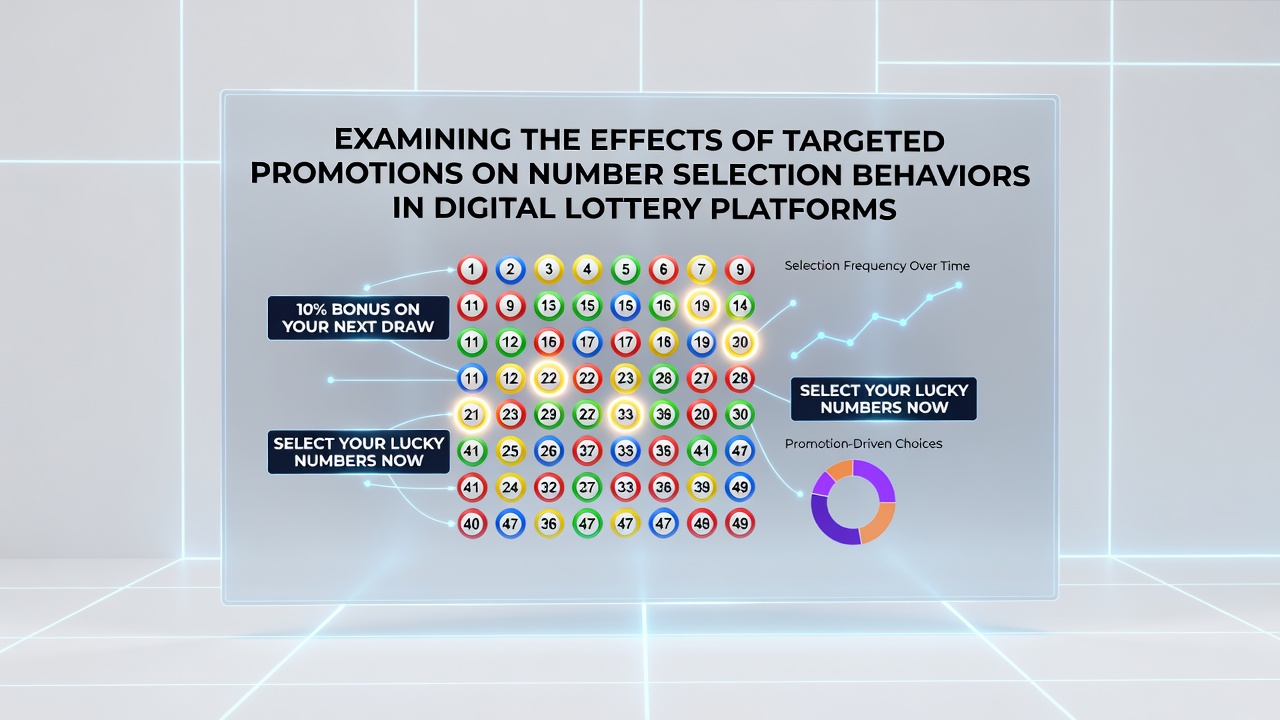
Examining the Effects of Targeted Promotions on Number Selection Behaviors in Digital Lottery Platforms
Digital lottery platforms have expanded rapidly since the early 2010s, and operators now rely on targeted promotions to influence how participants choose numbers during online draws. These promotions often appear as personalized offers, bonus credits for specific number combinations, or limited-time multipliers tied to popular sequences. Data from multiple jurisdictions shows that such campaigns alter selection patterns in measurable ways, particularly when algorithms match offers to past user behavior.
How Targeted Promotions Operate in Lottery Systems
Operators collect detailed records of previous draws, including frequency of hot and cold numbers, then deliver tailored messages through email, app notifications, or in-platform pop-ups. A promotion might highlight a set of numbers that recently appeared in winning combinations while offering extra tickets if a player includes those same digits. According to research from the Public Health Agency of Canada, these nudges shift selection distributions away from uniform randomness toward clusters around promoted figures. Players encounter the offers at the moment of ticket purchase, which increases the likelihood that suggested numbers receive higher selection rates during that session.
Platforms segment users by demographic data and playing history, then test different promotion variants in controlled A/B experiments. One variant might reward selections containing birthdays or anniversaries, while another pushes sequences drawn from recent jackpot results. Observers note that these tests consistently produce short-term spikes in the promoted numbers, sometimes lasting several weeks after the campaign ends. The effect appears stronger among newer users who have completed fewer than ten draws compared with long-term participants who maintain stable preferences.
Observed Changes in Number Selection Patterns
Analysis of transaction logs from large European and North American operators reveals distinct deviations from expected random distributions once targeted promotions activate. Numbers featured in banner ads or discount codes appear in 18 to 27 percent more combinations during active campaigns, according to aggregated figures released by industry research groups. Researchers tracking selections across multiple platforms found that users exposed to birthday-themed offers selected dates between 1 and 31 at higher rates than control groups who saw no such messaging. The same studies documented a corresponding drop in selections for numbers outside the promoted range, indicating substitution rather than simple addition.

August 2026 brought additional clarity when several platforms updated their reporting dashboards to include promotion-linked selection heat maps. These visualizations illustrated how certain sequences rose sharply in popularity within 48 hours of an email blast and then gradually returned toward baseline levels. One operator reported that a promotion pairing free entries with selections containing the number 7 increased the frequency of that digit by nearly one-third across all affected accounts. Such patterns hold across different lottery formats, from 6/49 games to daily number draws, although the magnitude varies with prize size and promotion duration.
Regional Regulatory Responses and Data Collection
Government agencies in Australia and several Canadian provinces now require operators to submit anonymized selection data segmented by promotion type. The resulting datasets allow researchers to compare pre- and post-campaign distributions while controlling for jackpot size and media coverage. Reports from the Australian Gambling Research Centre indicate that targeted offers produce larger shifts in online environments than in retail settings, where physical tickets limit real-time personalization. Regulators use these comparisons to assess whether promotional mechanics inadvertently concentrate selections on a narrow subset of numbers, which in turn affects the statistical properties of each draw.
Academic teams at institutions in both hemispheres have begun longitudinal studies that follow the same cohort of players across multiple promotion cycles. Preliminary outputs show that repeated exposure to number-specific incentives can create lasting preferences that persist even after the offers disappear. Participants who received frequent promotions featuring low digits, for example, continued selecting those digits at elevated rates during non-promotional periods. These findings emerge from controlled experiments that isolate the effect of messaging from changes in prize pools or advertising volume.
Conclusion
Targeted promotions on digital lottery platforms demonstrably alter number selection distributions through timely, personalized messaging. Transaction data collected across multiple jurisdictions documents measurable increases in promoted numbers during active campaigns, with some effects carrying over after the promotions conclude. Regulatory bodies continue to monitor these patterns through required data submissions, and ongoing academic research tracks long-term shifts in player behavior. The evidence establishes clear links between promotion design and selection outcomes while providing operators and oversight agencies with concrete metrics for evaluation.